

I’ve started noticing something slightly embarrassing recently, that I’ve been doing for such a long time now. I’ll pick up my phone for “five minutes”, scroll through social media for half an hour, and somehow come away feeling both overstimulated and completely undernourished, like I’ve consumed a huge amount of information without actually experiencing anything.
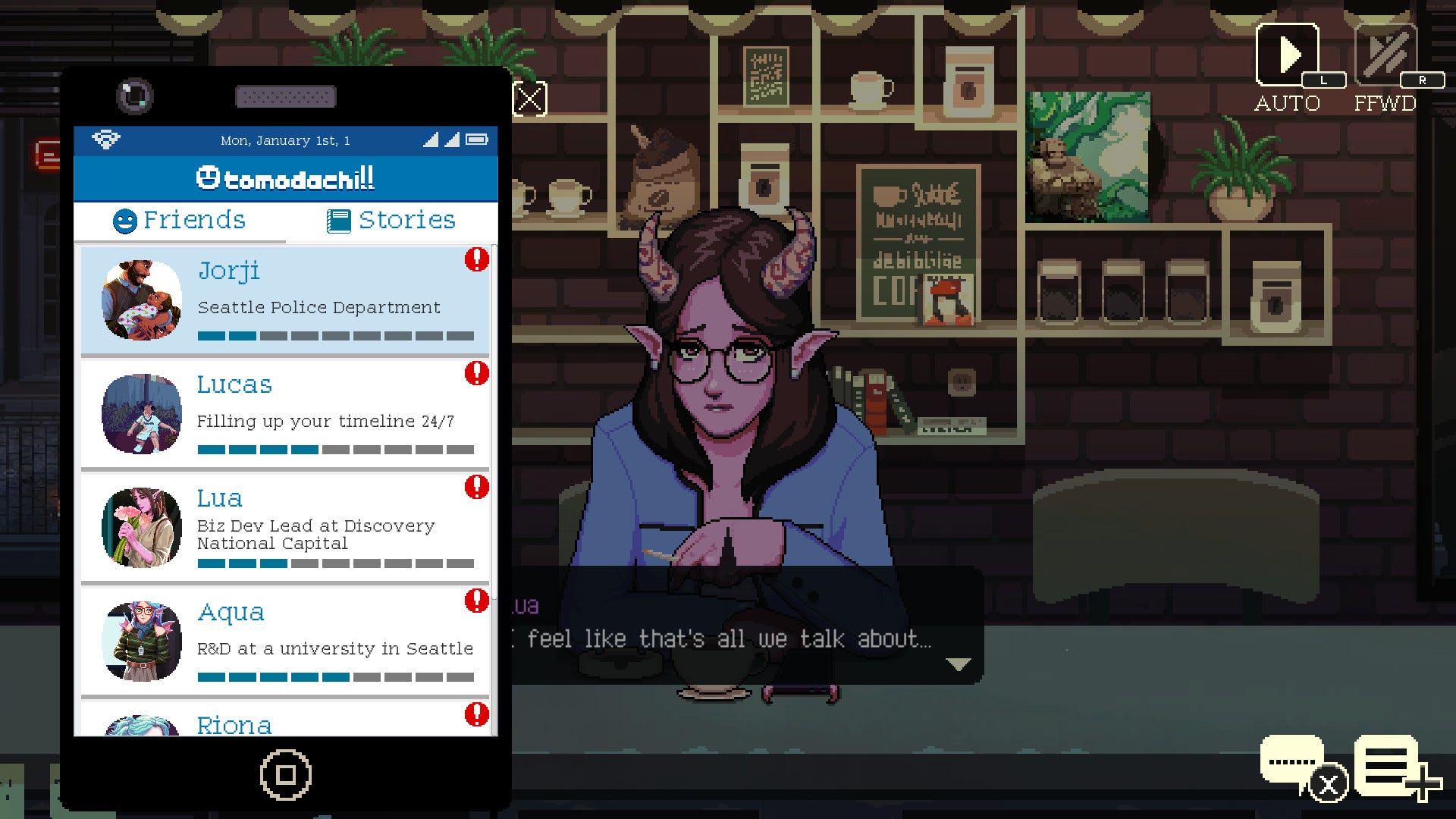
Then I’ll spend the same amount of time playing something like Coffee Talk or Unpacking and feel noticeably calmer afterwards. And because I’m apparently incapable of having a simple human experience without immediately trying to research it, I wanted to know whether there was anything behind this beyond personal preference.
Unfortunately for my screen time report, there absolutely is!
One of the concepts that keeps appearing in research around attention and digital media is something called attention residue. The basic idea is that when we rapidly switch between tasks, or between emotional contexts, part of our attention stays stuck on the previous thing. Social media is essentially engineered to maximise this.
Within minutes you might move from a video of someone renovating a cottage in the countryside, to news about war, to a recipe, to an argument, to an advert, to a nostalgic clip from a 90s sitcom, to someone announcing they wake up at 4am to optimise their mindset, so your brain never really settles anywhere long enough to recover.
Researchers studying heavy social media use have consistently linked it to increased cognitive overload, attentional fragmentation, stress, and mental fatigue, which feels less like a revelation and more like someone finally putting academic language to the sensation of opening Instagram and emerging forty minutes later with the psychological texture of soup.
What’s interesting to me is that games, particularly cosy games, often create the opposite cognitive experience. They tend to narrow attention rather than scatter it; you are here, doing this one thing. Water the crops, organise the bookshelf, deliver the package, clean the dirty wall, etc, etc. It sounds simplistic, but psychologically it matters quite a lot.

The researcher Mihaly Csikszentmihalyi coined the term flow state to describe periods of deep absorption where attention becomes fully engaged in a task. And games, researchers note over and over again, are unusually effective at inducing this state because they provide clear goals, immediate feedback, and manageable levels of challenge.
While social media doesn’t really provide closure, games, it’s been found, usually do.
There’s no natural endpoint to scrolling socials; the feed is infinite by design. You never really finish, but in Unpacking, eventually the room is complete. In PowerWash Simulator, the patio becomes clean, and in AC:NH, the daily tasks are done and the shops close for the night.
A lot of research into stress and cognitive fatigue points toward uncertainty and incompleteness being mentally taxing. The brain likes resolution, and it likes environments where effort produces visible outcomes. Social media, by contrast, often creates what psychologists call “continuous partial attention”; a state where you’re never fully focused but never fully resting either. Which I think explains why scrolling can feel exhausting in a uniquely modern way. You’re consuming hundreds of tiny emotional fragments without ever fully processing any of them.
And unlike television, books, or games, social media also tends to involve a layer of self-performance. Even when you’re not posting, there’s often an ambient awareness of visibility, comparison, productivity, attractiveness, success, relevance.
I don’t think it’s accidental that so many adults, particularly women over forty, are gravitating toward cosy games right now.
By this point in life, many of us have spent decades being reachable, useful, efficient, and available. Social media somehow intensifies that feeling rather than relieving it. Even leisure starts becoming performative. Your hobbies become content, or your interests become personal branding exercises.
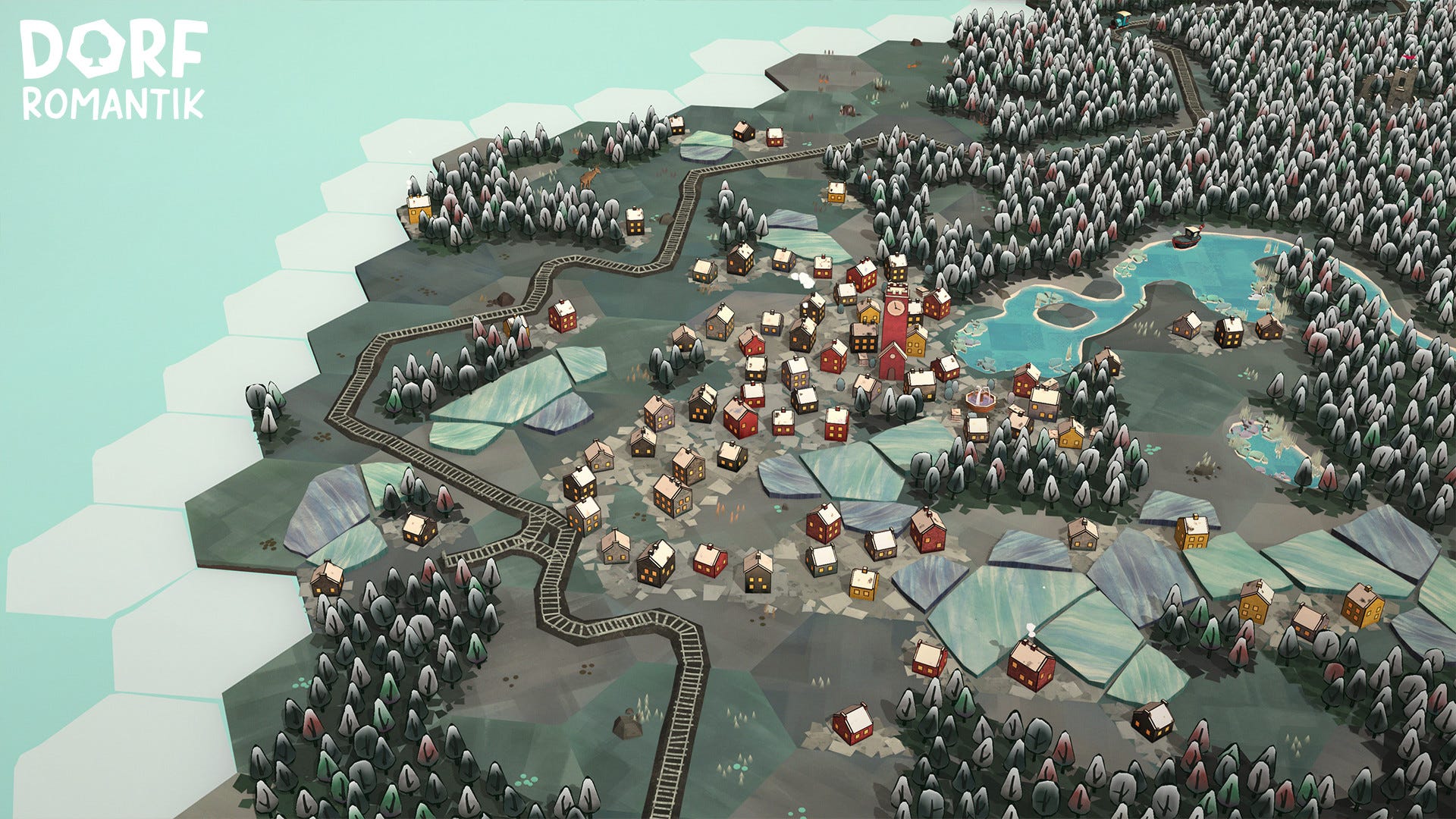
Cosy games often refuse that entire framework. Nobody cares how efficiently I arrange my kitchen in Unpacking, and there is no algorithm watching whether my approach to Dorfromantik is scalable. The games simply allow me to pay attention to something for a while. And attention, increasingly, feels like one of the most depleted resources we have.

I think that’s why certain cosy games can feel restorative in a way that’s difficult to explain to people who don’t play them. It’s not necessarily escapism, at least not in the dismissive sense the word usually gets used, but more that games can create sustained attention without sustained pressure, a combination that is becoming surprisingly rare.
I also think there’s something important in the fact that cosy games are active rather than passive. Even slower or narrative games require some level of participation, whereas scrolling often feels like attention happening to you. Games feel like attention directed by you, and maybe that distinction is part of why one leaves me feeling depleted while the other leaves me feeling relaxed and recharged.
I want to be careful not to romanticise gaming. Games can absolutely become compulsive, and they can become avoidance mechanisms, of course they can. They can become another screen-based way to disappear from your own life if the balance isn’t right. But I do think there’s something increasingly valuable about spaces where your attention isn’t being constantly demanded by something else.

References & Further Reading
I’m not a researcher or clinician, just someone interested in how games affect us psychologically. These studies were some of the most interesting things I found while researching this piece.
Csikszentmihalyi, M. (1990). Flow: The Psychology of Optimal Experience. Harper & Row.
Leroy, S. (2009). “Why Is It So Hard to Do My Work? The Challenge of Attention Residue When Switching Between Work Tasks.” Organizational Behavior and Human Decision Processes, 109(2), 168–181.
Mark, G., Gudith, D., & Klocke, U. (2008). “The Cost of Interrupted Work: More Speed and Stress.” Proceedings of the SIGCHI Conference on Human Factors in Computing Systems.
Ophir, E., Nass, C., & Wagner, A. D. (2009). “Cognitive Control in Media Multitaskers.” Proceedings of the National Academy of Sciences, 106(37), 15583–15587.
Alter, A. (2017). Irresistible: The Rise of Addictive Technology and the Business of Keeping Us Hooked. Penguin Press.
Montag, C., & Walla, P. (2016). “Carpe diem instead of losing your social mind: Beyond digital addiction and why we all suffer from digital overuse.” Cogent Psychology, 3(1).
Kuss, D. J., & Griffiths, M. D. (2017). “Social Networking Sites and Addiction: Ten Lessons Learned.” International Journal of Environmental Research and Public Health, 14(3).
Reinecke, L. (2009). “Games and Recovery: The Use of Video and Computer Games to Recuperate from Stress and Strain.” Journal of Media Psychology, 21(3), 126–142.
Russoniello, C. V., O’Brien, K., & Parks, J. M. (2009). “The Effectiveness of Casual Video Games in Improving Mood and Decreasing Stress.” Journal of CyberTherapy and Rehabilitation, 2(1), 53–66.
Granic, I., Lobel, A., & Engels, R. C. M. E. (2014). “The Benefits of Playing Video Games.” American Psychologist, 69(1), 66–78.
Bowman, N. D. (2016). “The Rise (and Refinement) of Moral Panic.” In Video Games: A Medium That Demands Our Attention. Routledge.
Rosen, L. D., Carrier, L. M., & Cheever, N. A. (2013). “Facebook and Texting Made Me Do It: Media-Induced Task-Switching While Studying.” Computers in Human Behavior, 29(3), 948–958.
This is a good read. It really put words to a lot of feelings I have about social media. It also makes me very hopeful to know that an hour or two of Stardew Valley on a Sunday morning can help wash away some the weeks accumulated mental fatigue. Great work!!
There are so many great quotes in your piece, but you nailed it with "clear goals, immediate feedback, and manageable levels of challenge"—this, to me, is the perfect summary of why cozy games are so satisfying. I also relate fully to what you write about the effect social media has on you (on us); I feel the same deep dissatisfaction when I catch myself scrolling mindlessly. It takes conscious effort to emerge from it and put the phone down; for me personally, years of mindfulness meditation helped as well, but I'm also seeing the cozy games I play in a new light.
Thank you for such a thoughtful essay, as always, Ellie.